No, cover letters are not dead in 2026, but they are no longer mandatory by default. The cover letter became a tiebreaker, not a default signal. Write one when it can actually move the needle, and skip it for mass applications where it adds nothing.
A cover letter is now situational. Write one when it helps (it is required, you have a referral, a career-change story, or a gap to explain), and skip it for high-volume applications where it would only restate your resume. The data on whether recruiters read them is mixed, and that split is the whole point: a templated cover letter is a waste of time, while a tailored one is a genuine edge.
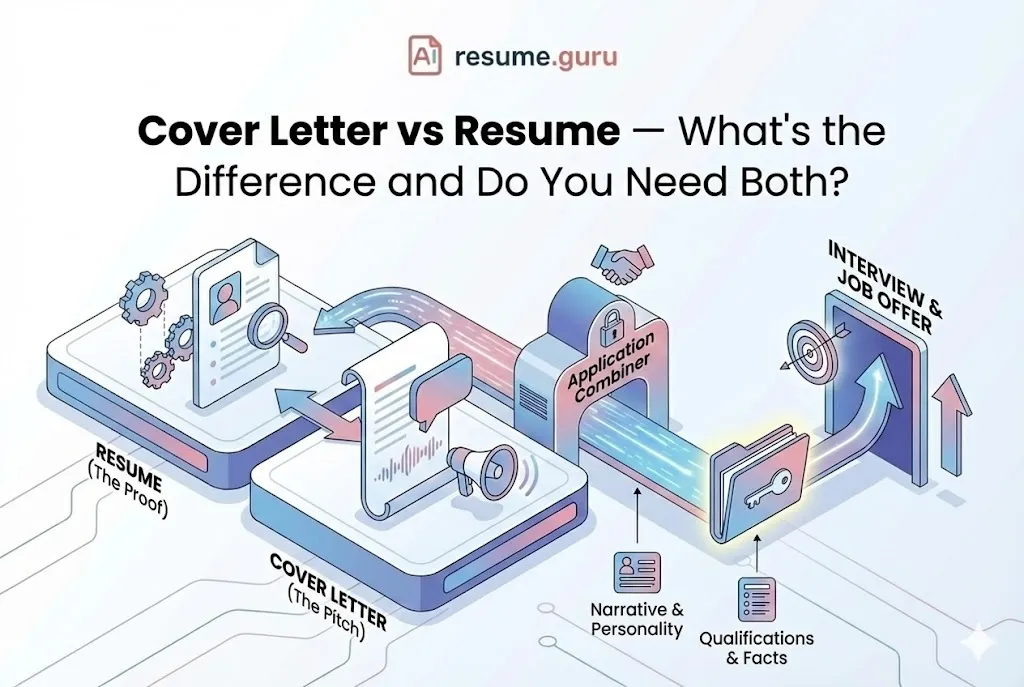
This post lays out the latest 2026 data honestly, covers what replaced the cover letter for most candidates, breaks it down by role type, and gives you a clear rule for every situation. (It answers whether to write one. For how, see our AI cover letter guide. For what each document does, see cover letter vs. resume.)
The Short Version
- Not dead, situational. Write one when it helps; skip it when it does not.
- The 2026 data is mixed: most hiring managers read them, while over half of recruiters do not.
- A generic cover letter is worthless; a tailored one is an edge.
- AI changed the math. Anyone can generate a letter, so personalization is now the whole signal.
- For many candidates, referrals, portfolios, and short application prompts quietly replaced the long letter.
If you have already decided a role is worth a real letter, our free Cover Letter Generator tailors one to the specific job posting in seconds, so the version you send is the personalized one recruiters actually value rather than a template.
Do Recruiters Still Read Cover Letters in 2026?
Here is why nobody can give you a clean yes or no: the surveys point in opposite directions, and both are right for their group.
The “they still matter” camp:
Hiring managers read most cover letters
When a cover letter is present, most hiring managers read it.
Source: Resume Genius, 2026
Say cover letters influence interview decisions
Among hiring managers who weigh them, the letter affects who gets called.
Source: Resume Genius, 2026
The “they are being ignored” camp:
Recruiters who never read cover letters
Third-party and high-volume recruiters skip the letter most.
Source: Novoresume HR Survey, 2026
(Novoresume also sells a builder, so if you are shopping for one you can compare against novoresume while you read their numbers.)
The numbers look contradictory until you notice they describe different people. Hiring managers, who own the role, read letters. Recruiters, who screen hundreds of applicants at speed, mostly do not. With under 30 seconds spent on a letter that does get opened (Novoresume, 2026), the bar for being worth that time is high.
How to reconcile the gap
This is not a contradiction, it is a question of who you ask. High-volume recruiters skip cover letters most because they are triaging a flood of applications. Hiring managers and HR leaders closer to the final decision skip them far less. The rule of thumb: the higher up the decision chain, and the more a role matters to you, the more likely your cover letter actually gets read. That is why effort scales with how much you want the job.
What Replaced the Cover Letter?
For most candidates, the cover letter did not vanish so much as get unbundled. Its old job (introduce yourself, explain your fit, show motivation) is now spread across signals that travel faster and convince harder. If you are wondering whether to spend an hour on a letter, ask first whether one of these does the job better — in most cases the better hour is spent to tailor your resume to the job.
| What it replaces | Why it often wins |
|---|---|
| A warm referral or internal intro | Skips the pile entirely; a name beats a paragraph |
| A portfolio or work sample | Shows ability instead of describing it |
| A short note to the hiring manager | A two-line LinkedIn message lands when a long letter would not |
| The one or two custom application prompts | Many ATS forms now ask 'why this role' instead of a full letter |
| A tight, tailored resume summary | Front-loads fit in the document everyone actually reads |
The practical takeaway: before you write a letter, spend your effort where it compounds. A referral or a live portfolio that shows real work usually beats prose. If your resume itself is doing the heavy lifting, tighten that first. Our free resume summary generator and the AI resume builder help you front-load fit in the document recruiters read in seconds, and you can save both your resume and cover letter to a free account so they stay in sync for the next application.
The bridge nobody mentions
Recruiters reach out on LinkedIn far more than they read attachments. A two-sentence message to the actual hiring manager, paired with a strong profile, often does what a cover letter used to. Know who you are writing to: a recruiter wants speed and keywords, a hiring manager wants fit and motivation.
Does Skipping a Cover Letter Hurt Your Application?
This is the fear behind every “should I write one if it is optional” search, so let us answer it head-on. When a cover letter is genuinely optional, skipping it rarely costs you.
Recruiters who deduct points for a skipped optional cover letter
Roughly three in four do not penalize you for skipping an optional letter.
Source: ResumeGo
In ResumeGo’s survey of recruiters and hiring managers, only about a quarter said they would deduct points from a candidate who left out a cover letter that was optional. That means roughly three out of four will not hold it against you. So if the field is empty and you would only be sending a template, skipping is the rational move.
What does move the needle is the resume itself clearing the screen — here is what a good ATS score actually looks like.
The real risk is not omission, it is the wrong omission. Skipping a required letter can auto-reject you. Skipping when you have a referral or a career-change story wastes a genuine advantage. The penalty for skipping is low; the penalty for skipping the one that mattered is high.
When to Write One
Write a Cover Letter When...
- The application requires it (skipping a required field can auto-reject you)
- It is marked optional but you genuinely want the job
- You have a referral or a specific story to tell
- You are a career changer or explaining an employment gap
- It is a smaller company or startup where a human reads every application
- It is a senior or niche role where fit and motivation are not obvious from a resume
If your situation is a career gap or a switch into a new field, the letter earns its keep: a resume lists what happened, a letter explains it. For candidates with little or no experience, a short letter can carry the context a thin resume cannot.
When You Can Skip One
Skip the Cover Letter When...
- It is not requested and there is no field for it.
- You are doing high-volume applications and would only send a generic template.
- It would add nothing, just restating your resume in paragraph form.
- You cannot tailor it. A template letter signals low effort more than no letter does.
The Quick Decision Guide
| Your situation | Write it? |
|---|---|
| Application requires a cover letter | Yes, always |
| Marked optional but you want the job | Yes |
| You have a referral or strong story | Yes |
| Career change or employment gap | Yes |
| Small company / founder reads applications | Yes |
| Mass-applying to job-board listings | Skip (or only if quick to tailor) |
| No field for it, not requested | Skip |
| You would only send a generic template | Skip; a template hurts more than absence |
It Depends on the Role: Seniority and Industry
“Are cover letters dead” has different answers for a new grad, a staff engineer, and a hospital administrator. The decision-chain pattern shows up clearly when you break it down by role type.
| Role type | Does the letter matter? |
|---|---|
| High-volume entry-level (retail, ops, support) | Mostly skipped; recruiters triage on keywords and speed |
| Tech and engineering | Low; portfolio, GitHub, and take-home assessments outweigh prose |
| Senior, leadership, and strategy roles | Higher; motivation and fit are not obvious from a resume |
| Career changers and gap explainers | High; the letter does work the resume cannot |
| Startups and small companies | High; a founder often reads every application personally |
| Mission-driven and academic roles | High; fit and intent are part of the evaluation |
For technical roles especially, this is why “are cover letters necessary for tech jobs” keeps trending: the work itself is the audition. A clean repo and a tailored, keyword-aware resume do more than a paragraph ever will. The higher and more specialized the role, though, the more a sharp letter earns its place.
How AI Changed the Math
AI did not kill the cover letter. It killed the generic one and raised the bar for everyone else.
Now that anyone can generate a letter in seconds, a lazy AI dump actively hurts you. Resume Genius found about 74% of hiring managers have encountered AI-generated content in applications, and roughly 47% have flagged AI-written resumes or cover letters specifically (Resume Genius, 2026). When that much of the pile is obvious AI, an unedited letter blends into the noise, and a meaningful share of hiring managers say obviously AI-generated content makes them less likely to hire. Many can tell when you used AI, and they care.
The flip side is the opportunity. Hiring managers can readily tell a tailored letter from a template, and they value the tailored one far more. Because generation is now free for everyone, personalization is the entire signal.
Use AI to draft, not to decide
The right workflow: draft fast with AI, then make it sound like you with real details, a specific reason for this role, and a result only you could claim. That is exactly what our free Cover Letter Generator is built for: it pulls from the job posting so you start tailored instead of generic. (Here is how to do it without sounding like AI.)
How Short Should It Be?
Even when a letter is worth writing, length is where most people lose. Recruiters skim the first two or three sentences, and the whole letter gets under 30 seconds (Novoresume, 2026). Yet plenty of candidates still send 400-word essays.
Aim for roughly 150 to 250 words across three tight paragraphs: why this specific role, one concrete proof point, and a clean close. Front-load the fit so the part recruiters actually read does the persuading. For the full length breakdown by role and format, see how long should a cover letter be.
The Bottom Line
Cover letters are not dead. They are optional, with real upside when you use them right. Write one when it is required or genuinely adds value, skip it when it would be generic filler, and never send one you did not personalize. And remember that a referral, a portfolio, or a short note to the hiring manager often does the job a letter used to.
The question was never “are cover letters dead.” It is “is this cover letter worth writing, or is there a faster way to make my case.” Now you have the rule to answer both.
Decided it is worth writing? Make it count
Do not send a generic one. Our free Cover Letter Generator tailors a letter to the specific job in seconds, so the version you send is the personalized one recruiters actually value.
Try the Cover Letter GeneratorRelated Resources
- Cover Letter Generator — When you do write one, make it count
- How to Use ChatGPT to Write a Cover Letter — Write one without sounding like AI
- Cover Letter vs. Resume — What each document is for
Frequently Asked Questions
Are cover letters dead?
No, but they are no longer mandatory by default. A cover letter is now situational. Write one when it can actually help, when it is required, when you have a referral or a story to tell, or when you are explaining a career change or gap. Skip it for mass applications where it adds nothing.
Are cover letters necessary in 2026?
Only sometimes. Many companies still require them, and a strong one can influence interview decisions. But a meaningful share of recruiters never read them. The honest rule: write one when it is required or genuinely adds value, and do not bother sending a templated one.
Do recruiters actually read cover letters in 2026?
The data is mixed. Resume Genius found 83% of hiring managers read most cover letters, while Novoresume's 2026 survey found 51.7% of recruiters never do. The pattern: the higher up the decision chain and the more a role matters, the more likely your letter gets read.
What replaced the cover letter in 2026?
For most candidates, the cover letter's old job is now split across other signals: a warm referral, a portfolio or work sample, a short LinkedIn note to the hiring manager, and the one or two custom prompts many applications now ask instead of a full letter. The letter became a tiebreaker, not the default entry ticket.
Does skipping a cover letter hurt your application?
Usually not when it is genuinely optional. A ResumeGo survey found only about 26% of recruiters deduct points from a candidate who skips an optional cover letter, so roughly three in four do not penalize you. The exception is required fields, referrals, and roles where motivation is not obvious from a resume.
How short should a cover letter be in 2026?
Short. Recruiters skim the first two or three sentences and spend under 30 seconds total, so aim for roughly 150 to 250 words across three tight paragraphs. Lead with why you fit this specific role. See how long should a cover letter be for the full breakdown.
Are cover letters necessary for tech jobs?
Rarely as a deciding factor. For most engineering and product roles, your portfolio, GitHub, take-home assessment, and referrals carry far more weight than prose. Write one when a startup founder reads every application or when you need to explain an unusual path, and skip it for high-volume tech listings.
When can you skip a cover letter?
You can skip it when it is not requested and there is no field for it, when you are doing high-volume applications, or when it would only restate your resume. If you cannot tailor it to the specific job, you are usually better off without it than sending an obvious template.
Do hiring managers read optional cover letters?
Many do. Surveys show a large share of hiring managers still expect a cover letter even when the posting marks it optional. If you genuinely want the role, treating 'optional' as 'recommended' is the safer bet, especially for smaller companies.
What percentage of cover letters are AI-generated?
A large and rising share. Resume Genius found about 74% of hiring managers have encountered AI-generated content in applications, and roughly 47% have flagged AI-written resumes or cover letters specifically. That flood is exactly why a generic AI dump now hurts and a personalized letter stands out.
Does a cover letter actually help you get an interview?
It can. Surveys find a strong cover letter influences interview decisions for most hiring managers, and tailored letters have been linked to higher callback rates than generic ones or none at all. The key word is tailored. A generic letter adds little and may signal low effort.
Put this into practice
You have the theory. These take a few minutes and work on the resume you already have.