You’ve written the whole cover letter in your head. Then you hit the very first line (“Dear…”) and freeze. You couldn’t find the hiring manager’s name, and now you’re wondering whether “To Whom It May Concern” makes you look lazy.
Here’s the short answer on how to address a cover letter: use “Dear [Mr./Ms./Mx.] Lastname,” when you know the name, and “Dear Hiring Manager,” when you don’t. That covers most situations. The rest of this guide handles the edge cases: ambiguous names, multiple recipients, recruiters versus hiring managers, and email versus a formal PDF.
The Quick Answer
- Know the name? “Dear Mr./Ms./Mx. Lastname,” (or the full name if gender is unclear).
- No name? “Dear Hiring Manager,” works every time.
- Know the team or role? “Dear [Department] Team,” or “Dear [Job Title],”.
- Multiple people? “Dear Hiring Managers,” or list two to three names.
- Skip “To Whom It May Concern” and “Dear Sir or Madam.”
The Salutation Decision Table
Find your situation and use the matching greeting. The same research that gets you the name should shape the resume too, so tailor your resume to the job while you’re in the posting.
| Your situation | Use this greeting |
|---|---|
| Know full name, it's a man | Dear Mr. Lastname, |
| Know full name, it's a woman | Dear Ms. Lastname, (never Mrs. unless stated) |
| Name found, gender unclear | Dear Firstname Lastname, (no honorific) |
| Knows they use Mx. | Dear Mx. Lastname, |
| Has a doctorate or is a professor | Dear Dr. Lastname, |
| No name, know the department | Dear Marketing Team, |
| No name, know the role you'd report to | Dear Creative Director, |
| No name at all (default) | Dear Hiring Manager, |
| Two or three named people | Dear Ms. Lee, Mr. Patel, and Dr. Chen, |
| Agency or talent team | Dear [Company] Recruiting Team, |
| Academic / government / nonprofit panel | Dear Hiring Committee, |
Skip the guesswork entirely
Not sure which greeting fits? The free Cover Letter Generator picks the right salutation for you and drafts the rest of the letter, so you start from a finished draft instead of a blinking cursor.
When You Know the Name
A named greeting is the strongest option, because it shows you did your homework. Get the format right:
- Standard: “Dear Ms. Lastname,” or “Dear Mr. Lastname,”. Surname with an honorific reads as most professional.
- Gender unclear or an ambiguous name: use the full name, no honorific: “Dear Jordan Blake,”. This is the safest, most respectful choice when you can’t tell.
- Someone who uses Mx.: “Dear Mx. Lastname,” is the gender-neutral equivalent of Mr./Ms.
- Doctorate or professor: “Dear Dr. Lastname,”. Academic and medical titles override Mr./Ms.
- Never assume “Mrs.” Use “Ms.” unless she’s explicitly stated otherwise.
First names?
Only use a first name if the company is clearly casual, say, a startup whose job posting addresses you by first name. When in doubt, stay formal. It’s the safer read.
How to Find the Hiring Manager’s Name
Before defaulting to “Hiring Manager,” spend two minutes looking. The name is often findable:
- 1
Re-read the job posting
Look for a contact email, a recruiter signature, or a 'reports to' line.
- 2
Search LinkedIn
Try '[Company] recruiter,' the department head, or check who posted the job.
- 3
Check the company website
About, Team, or Leadership pages often list the right person.
- 4
Google it
Search '[Company]' plus the department or role you're applying to.
- 5
Call reception
Ask, 'Who's managing hiring for the [role] position?' It works more often than you'd think.
Once you have the name, you can paste the job description into the Cover Letter Generator and it drops the correct salutation in for you, then matches the letter to the posting.
One name to skip
Don’t address the letter to the CEO or founder (unless it’s a tiny company). They rarely screen applications, and it reads as misdirected. Aim for the recruiter or the hiring manager you’d actually report to.
Recruiter vs. Hiring Manager: Who Are You Writing To?
These are two different people, and your greeting should match whoever reads your application first.
A recruiter sources and screens candidates; they often own the early stages. A hiring manager runs the team you’d join and makes the final call. Many applications pass through the recruiter before the hiring manager ever sees them.
- A named recruiter posted the job? Address them directly: “Dear Mr./Ms. Lastname,”. You’re writing to the person reading it first.
- The listing names the team but not a person? Target the hiring manager with “Dear [Department] Team,” or “Dear [Job Title],”.
- No idea who screens first? “Dear Hiring Manager,” is the safe catch-all that works for either.
For a deeper look at how these roles split the process, see recruiter vs. hiring manager. It changes how you tailor the whole application, not just the greeting.
When You Can’t Find a Name
No name after a genuine search? Use these, in order of preference:
- “Dear Hiring Manager,” is the widely accepted catch-all. Recruiters and hiring managers consistently rate it as the safest greeting when no name is available, and it’s the option most career guides recommend by default.
- “Dear [Department] Team,” for example, “Dear Marketing Team,” when you know the function.
- “Dear [Company] Recruiting Team,” for recruiter-managed roles where no single person is named.
- “Dear [Job Title],” for example, “Dear Creative Director,” when you know who you’d report to.
- “Dear Hiring Committee,” for academic, government, and nonprofit panels.
Addressing Multiple Recipients
Sometimes a posting names two or three people, or you know a small panel will review applications. Keep it to one greeting line:
- Two or three named people: list them with honorifics: “Dear Mr. Lee, Ms. Patel, and Dr. Chen,”. Order them by seniority if you know it; otherwise alphabetical is fine.
- A larger or unnamed group: use the plural “Dear Hiring Managers,”. It’s clean and inclusive when several people screen.
- A formal panel: “Dear Hiring Committee,” or “Dear Search Committee,” fits academic, government, and nonprofit roles.
Don't do this
Avoid stacking separate greeting lines (“Dear Mr. Lee, / Dear Ms. Patel,”) or writing “Dear Sirs,” for a mixed group. One combined line is cleaner and avoids assuming anyone’s gender.
The Greetings to Retire
Avoid these in 2026
- “To Whom It May Concern” is impersonal and dated, and it signals zero research. It won’t always sink you, but it’s strictly worse than “Dear Hiring Manager.”
- “Dear Sir or Madam” is gendered and archaic, and it assumes a binary.
- “Hey” / “Hi there” are too casual for a cover letter.
- “Esteemed Hiring Manager” / “Ladies and Gentlemen” are overwrought or generic.
To be fair, the data says “To Whom It May Concern” is rarely fatal. In a survey of over 1,000 hiring managers and recruiters, 83% said it would have little or no impact on their decision.
Say it has little or no impact
Of 1,000+ hiring managers and recruiters surveyed about 'To Whom It May Concern'
Source: ResumeCompanion, 2020
But “little or no impact” isn’t a recommendation. Why settle for neutral when “Dear Hiring Manager” costs you nothing and reads better? The same logic applies to the resume you attach — browse ATS-safe templates instead of settling for a layout that merely doesn’t hurt.
Colon or Comma?
A small detail people overthink:
- Comma is the standard for cover letters, slightly less formal: “Dear Hiring Manager,”
- Colon is more formal, common in academic, legal, and traditional business letters: “Dear Dr. Patel:”
Both are correct. Pick one and be consistent.
Email vs. Formal Letter (and the Header Block)
The greeting wording is identical either way. What changes is everything above the greeting, and people get this wrong constantly.
Sending a PDF or printed letter
Keep the full header block. Stack your contact details at the top, then the date, then the recipient’s name, title, company, and address. The greeting comes after all of that.
Pasting into the email body
Drop the header block entirely. The date, your address, and the recipient’s address all disappear. Your subject line and email signature already handle routing, so open straight with “Dear…” on the first line.
If you’re not sure what to put in the email itself, see what to write when emailing a resume.
So the same letter has two valid setups: a full business-letter header for the attachment, and a clean, greeting-first version for the email body. Don’t paste a full address block into an email; it looks like you copied a Word template without thinking.
The Bottom Line
The salutation isn’t where you win the job, but a sloppy one is an easy way to start on the wrong foot. Spend two minutes hunting for the name. If you find it, use it correctly. If you don’t, “Dear Hiring Manager” has you covered.
Then get on with the part that actually matters: the letter itself. If you’re starting from scratch, the no-experience cover letter guide shows how to open strong, and how long a cover letter should be keeps you from overwriting. Not sure you even need one? Read are cover letters dead in 2026 before you skip it.
Let the tool handle the greeting and the rest
The free Cover Letter Generator picks the right salutation and writes the whole letter, tailored to the job. Sign up to save your draft, then tailor your whole application with the AI resume builder.
Try the Cover Letter GeneratorRelated Resources
- Cover Letter Generator — Auto-formats the greeting and the whole letter
- Cover Letter With No Experience — Write your first cover letter
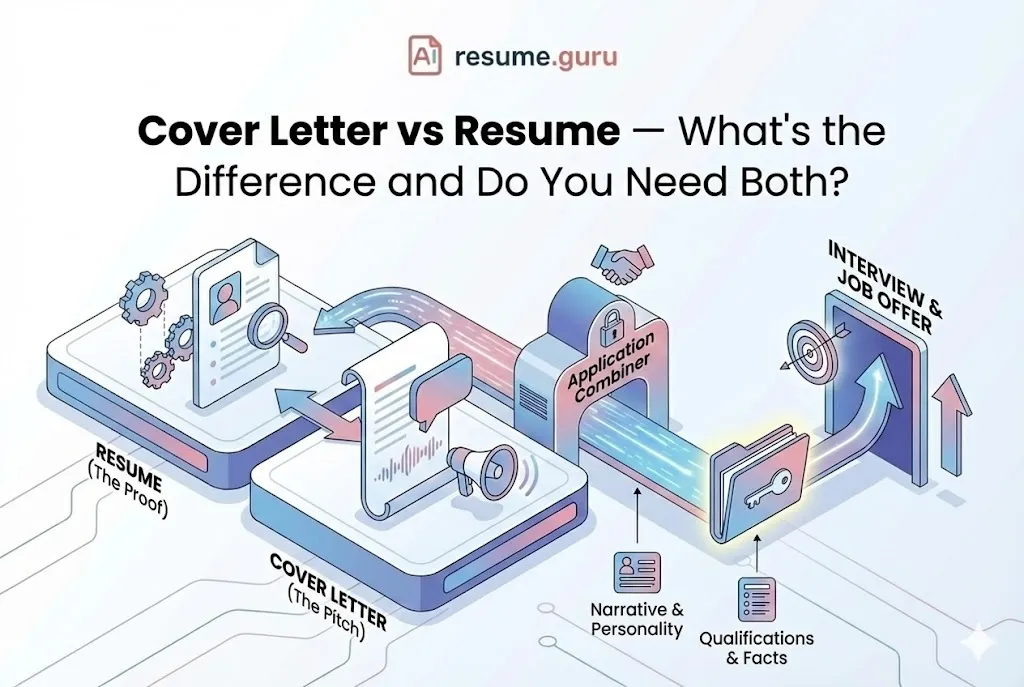
- Cover Letter vs. Resume — What each document does
Frequently Asked Questions
How do you address a cover letter without a name?
Use 'Dear Hiring Manager,' as your default. It's the widely accepted greeting when you can't find a name. If you know the department or the role you'd report to, you can also use 'Dear [Department] Team,' or 'Dear [Job Title],'. Avoid 'To Whom It May Concern.'
Is 'To Whom It May Concern' still acceptable in 2026?
It's not technically wrong, but it reads as impersonal and dated, and signals you didn't research the company. It rarely sinks an application on its own, but 'Dear Hiring Manager' is strictly better. Use the stronger option.
How do you address a cover letter to a hiring manager?
If you know their name, use 'Dear Mr./Ms./Mx. Lastname,' or, when the gender is unclear, their full name with no honorific: 'Dear Jordan Blake,'. Use 'Dr.' for someone with a doctorate. If you can't find a name, 'Dear Hiring Manager,' is the safe default.
How do you address a cover letter to multiple people?
For two or three named people, list them: 'Dear Mr. Lee, Ms. Patel, and Dr. Chen,'. For a larger or unnamed group, use 'Dear Hiring Managers,' or a panel greeting like 'Dear Hiring Committee,'. Don't write a separate greeting line for each person.
Do you put the date and address on a cover letter?
On a PDF or printed letter, yes: include your contact details, the date, and the recipient's name, title, and company address above the greeting. In a pasted email body, skip all of that. The subject line and your signature handle it, so open straight with the greeting.
Should you use a colon or comma after the cover letter greeting?
Both are correct. A comma is the standard, slightly less formal choice common in US cover letters ('Dear Hiring Manager,'). A colon is more formal and common in academic, legal, or traditional business letters ('Dear Dr. Patel:'). Just be consistent.
How do you find the hiring manager's name for a cover letter?
Re-read the job posting for a contact or 'reports to' line, search LinkedIn for the recruiter or department head, check the company's team or about page, or call reception and ask who's managing hiring for the role. Don't address the CEO, since they rarely screen applications.
How do you address a cover letter to a recruiter vs a hiring manager?
If a named recruiter posted the job, address them directly ('Dear Mr./Ms. Lastname,'). If the listing names the team you'd join, target the hiring manager or use 'Dear [Department] Team,'. When unsure who screens first, 'Dear Hiring Manager,' covers both safely.
What is a gender-neutral cover letter salutation?
The safest gender-neutral options are the person's full name with no honorific ('Dear Jordan Blake,'), 'Mx. Lastname' if you know they use it, or a role-based greeting like 'Dear Hiring Manager,'. Never guess gender from a name.
Is it okay to use the hiring manager's first name?
Only in casual or startup cultures where the job posting itself uses first names. When in doubt, default to a formal greeting (surname with an honorific, or the full name), because it's the safer professional choice.
Put this into practice
You have the theory. These take a few minutes and work on the resume you already have.