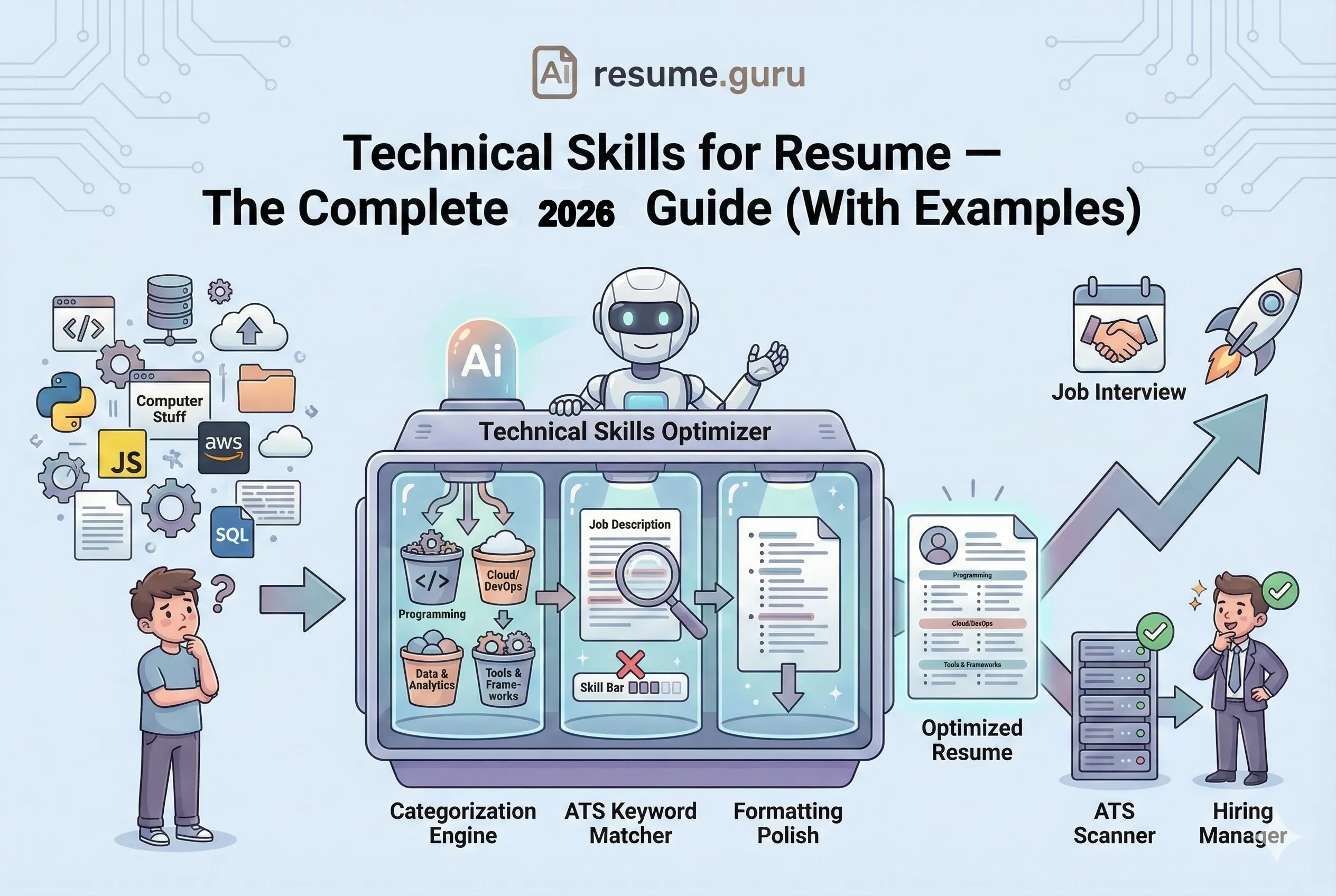
Your resume has 6 seconds to impress. And in that 6 seconds, hiring managers are scanning for one thing: do you have the skills to do this job?
Technical skills are the proof. They're the concrete, measurable abilities that show you can actually do the work—not just talk about it.
But here's where most people mess up: they either list random skills with no strategy, or they bury important ones where no ATS can find them.
Of resumes rejected before human review
Often because they're missing key technical skill keywords
Source: Jobscan Research, 2023
This guide gives you everything you need: which technical skills to include, how to organize them, and how to make sure both algorithms and humans can find them.
What You'll Learn
- How to structure your technical skills section for maximum impact
- Industry-specific skill lists you can copy into your resume
- The difference between skills that impress and skills that waste space
- How to match your skills to job postings for ATS optimization
- Common formatting mistakes that tank your resume
Technical Skills vs. Soft Skills: Know the Difference
Before we dive in, let's clarify what counts as a technical skill:
| Technical Skills (Hard Skills) | Soft Skills |
|---|---|
| Teachable, measurable abilities | Personality traits and behaviors |
| Python, SQL, Adobe Photoshop, CPA | Communication, leadership, teamwork |
| Learned through education, training, practice | Developed through experience and self-awareness |
| Can be tested or certified | Must be demonstrated through examples |
| Primary ATS filter for technical roles | Secondary consideration (but still matters) |
Info
This guide focuses on technical skills. For soft skills guidance, see our Soft Skills for Resume guide.
How to Structure Your Technical Skills Section
Your skills section should be:
- Near the top — right after your summary or contact info
- Organized by category — not a random list
- ATS-optimized — using exact terms from job postings
Here's the ideal structure:
TECHNICAL SKILLS
────────────────────────────────────────
Programming:    Python, JavaScript, TypeScript, SQL, Java
Frameworks:     React, Node.js, Django, FastAPI
Cloud/DevOps:   AWS (EC2, S3, Lambda), Docker, Kubernetes, CI/CD
Tools:          Git, JIRA, Confluence, VS Code, Postman
Data:           PostgreSQL, MongoDB, Redis, Tableau, pandas
Pro Tip
Organize skills in order of relevance to the job. If the posting emphasizes cloud experience, put that category first.
Technical Skills by Industry
Here are the most in-demand technical skills for 2026, organized by field:
Software Development & Engineering
The tech industry moves fast. Here's what employers want right now:
Programming Languages
Python, JavaScript, TypeScript, Java, C++, Go, Rust, C#,
Ruby, PHP, Swift, Kotlin, Scala, R, SQL
Frontend Development
React, Vue.js, Angular, Next.js, Svelte, HTML5, CSS3,
Tailwind CSS, SASS, Webpack, Vite, responsive design
Backend Development
Node.js, Express, Django, Flask, FastAPI, Spring Boot,
.NET, Rails, Laravel, RESTful APIs, GraphQL, microservices
Cloud & DevOps
AWS, Azure, Google Cloud Platform, Docker, Kubernetes,
Terraform, Jenkins, GitHub Actions, CI/CD, serverless,
Linux, Bash, infrastructure as code
Data & Databases
PostgreSQL, MySQL, MongoDB, Redis, Elasticsearch,
SQL Server, Oracle, DynamoDB, BigQuery, data modeling
Software Engineer Resume Must-Haves
- Primary programming language (Python, JavaScript, Java, etc.)
- Relevant frameworks for your specialty
- At least one cloud platform (AWS, Azure, GCP)
- Version control (Git is essential)
- Database experience (SQL and/or NoSQL)
Data Science & Analytics
Data roles require a mix of statistics, programming, and business acumen:
Programming & Analysis
Python, R, SQL, pandas, NumPy, SciPy, Jupyter,
statistical analysis, hypothesis testing, A/B testing
Machine Learning & AI
TensorFlow, PyTorch, scikit-learn, Keras,
machine learning, deep learning, NLP, computer vision,
model deployment, MLOps, feature engineering
Data Engineering
Apache Spark, Hadoop, Kafka, Airflow, dbt,
ETL/ELT, data pipelines, data warehousing,
Snowflake, Databricks, Redshift
Visualization & BI
Tableau, Power BI, Looker, Matplotlib, Seaborn,
Google Data Studio, Excel (advanced), data storytelling
Data Resume Tip
Always pair technical skills with business impact. "Built ML model" is weaker than "Built ML model that increased conversion by 23%."
Marketing & Digital Marketing
Modern marketing is increasingly technical:
Analytics & Tracking
Google Analytics 4, Google Tag Manager, segment,
Mixpanel, Amplitude, Hotjar, attribution modeling,
conversion tracking, A/B testing tools
Advertising Platforms
Google Ads, Meta Ads Manager, LinkedIn Campaign Manager,
TikTok Ads, programmatic advertising, DSPs,
PPC, display advertising, retargeting
Marketing Automation & CRM
HubSpot, Marketo, Salesforce Marketing Cloud,
Mailchimp, Klaviyo, Pardot, ActiveCampaign,
email automation, lead scoring, drip campaigns
SEO & Content
SEMrush, Ahrefs, Moz, Screaming Frog,
keyword research, on-page SEO, technical SEO,
Google Search Console, content management systems
Social & Creative
Hootsuite, Sprout Social, Buffer, Later,
Canva, Adobe Creative Suite, Figma,
video editing, social media management
Finance & Accounting
Finance requires precision and specific certifications:
Core Software
Excel (advanced: VLOOKUP, pivot tables, macros, VBA),
QuickBooks, SAP, Oracle, NetSuite, Workday,
Hyperion, Adaptive Insights, Anaplan
Financial Analysis
Financial modeling, forecasting, budgeting,
variance analysis, valuation (DCF, LBO, comps),
Bloomberg Terminal, Capital IQ, FactSet
Data & Reporting
SQL, Tableau, Power BI, financial reporting,
GAAP, IFRS, SOX compliance, internal controls
Certifications (Include if you have them)
CPA, CFA, CFP, CMA, ACCA, Series 7, Series 63,
Enrolled Agent, Certified Internal Auditor
Tip
In finance, Excel proficiency is assumed but specifics matter. List specific functions and features you know: pivot tables, VLOOKUP/XLOOKUP, macros, Power Query.
Healthcare & Medical
Healthcare has unique technical requirements:
Clinical Systems
Epic, Cerner, Meditech, Athenahealth, Allscripts,
Electronic Health Records (EHR), Electronic Medical Records (EMR),
medical billing software, practice management systems
Coding & Compliance
ICD-10, CPT codes, HCPCS, medical coding,
HIPAA compliance, Medicare/Medicaid billing,
revenue cycle management, claims processing
Clinical Skills (as applicable)
Patient assessment, vital signs monitoring,
medication administration, IV therapy, wound care,
phlebotomy, specimen collection, EKG
Certifications
BLS, ACLS, PALS, registered nurse (RN),
licensed practical nurse (LPN), medical assistant,
radiology technician, pharmacy technician
Project Management
PMs need both methodology knowledge and tool proficiency:
Methodologies
Agile, Scrum, Kanban, Waterfall, Lean, Six Sigma,
SAFe, sprint planning, backlog management,
continuous improvement, process optimization
Project Management Tools
JIRA, Asana, Monday.com, Trello, Microsoft Project,
Smartsheet, Basecamp, Notion, Confluence,
Gantt charts, resource planning, Roadmaps
Certifications
PMP, PMI-ACP, Certified Scrum Master (CSM),
PRINCE2, CAPM, Six Sigma Green Belt,
Six Sigma Black Belt, Lean certification
Info
For PM roles, list both the certification acronym AND full name: "Project Management Professional (PMP)" — ATS may scan for either.
Design & Creative
Creative roles need portfolio links, but skills still matter for ATS:
Design Tools
Figma, Sketch, Adobe XD, InVision,
Adobe Photoshop, Illustrator, InDesign, After Effects,
Canva, Framer, Principle, ProtoPie
UX/UI Specific
Wireframing, prototyping, user research, usability testing,
information architecture, design systems, accessibility (WCAG),
user flows, journey mapping, A/B testing
Development (for designers who code)
HTML, CSS, JavaScript, responsive design,
CSS frameworks (Tailwind, Bootstrap),
design handoff, Zeplin, developer collaboration
Motion & Video
After Effects, Premiere Pro, Final Cut Pro,
motion graphics, video editing, animation,
DaVinci Resolve, Cinema 4D
How to Match Skills to Job Postings
Don't just list your skills—list the right skills for each application.
- 1
Copy the job posting
Paste it into a document or our Keyword Scanner tool.
- 2
Highlight required technical skills
These must be on your resume if you have them.
- 3
Identify preferred/nice-to-have skills
Include these for bonus points—they differentiate you.
- 4
Match exact terminology
If they say 'PostgreSQL,' don't write 'Postgres.' ATS is literal.
- 5
Reorder your skills section
Put their priorities first. Skills at the top get more attention.
Check your skills match
Paste any job description and instantly see which technical skills you're missing.
Try Keyword ScannerSkills Formatting: Do's and Don'ts
Do This ✅
- Group skills by category for easy scanning
- Use exact terms from job postings
- Put most relevant skills first
- List only skills you can discuss in interviews
- Include both tool names and general concepts
Avoid This ❌
- Long, unorganized list of random skills
- Skill bars or percentage ratings (subjective)
- Outdated technologies no one uses
- Skills you used once 5 years ago
- Generic terms like 'computer skills'
Skills Section Examples
Weak Skills Section
Skills: Microsoft Office, communication, team player,
hard worker, problem solving, computers, fast learner,
social media, typing, organized
Why it fails: Mixed hard/soft skills, too generic, no technical depth.
Strong Skills Section
TECHNICAL SKILLS

Programming:     Python, JavaScript, SQL, Bash
Frameworks:      React, Django, FastAPI
Cloud:           AWS (EC2, S3, Lambda, RDS), Docker
Databases:       PostgreSQL, MongoDB, Redis
Tools:           Git, JIRA, Jenkins, Terraform
Why it works: Categorized, specific, ATS-friendly, shows depth.
Common Technical Skills Mistakes
Mistake 1: Listing Every Skill You've Ever Touched
Including technologies you used once in 2015 clutters your resume and sets false expectations.
Fix: Only include skills you could discuss confidently in an interview.
Mistake 2: Using Skill Bars or Ratings
"Python ████████░░ 80%" means nothing. Who's rating you? Compared to what?
Fix: Let your experience bullets show proficiency through achievements.
Mistake 3: Generic Descriptions
"Proficient in Microsoft Office" tells employers nothing.
Fix: Be specific: "Excel (pivot tables, VLOOKUP, data visualization, macros)"
Mistake 4: Ignoring the Job Posting
Listing skills that aren't relevant to the role wastes precious resume space.
Fix: Customize your skills section for each application. Put their priorities first.
Mistake 5: Hiding Skills in Dense Paragraphs
Burying "Kubernetes" in paragraph 3 of your job description means ATS might miss it.
Fix: Create a dedicated, scannable skills section at the top of your resume.
How Many Technical Skills Should You List?
| Role Type | Recommended | Notes |
|---|---|---|
| Entry-level | 8-12 skills | Focus on foundational tools and any specialized training |
| Mid-level | 12-18 skills | Show depth in primary area + breadth in related tools |
| Senior/Expert | 15-25 skills | Comprehensive but still curated—quality over quantity |
| Management | 10-15 skills | Balance technical credibility with leadership focus |
| Career changer | 10-15 skills | Emphasize transferable technical skills + new learning |
Tip
There's no exact number. The goal is to include every relevant skill for the job without padding with irrelevant ones.
Technical Skills Quick Checklist
Before You Submit
- Skills section is near the top of your resume
- Skills are grouped by category, not random list
- Terms match the job posting exactly (PostgreSQL, not Postgres)
- Only included skills you can discuss in interview
- No skill bars, percentages, or subjective ratings
- Most important skills for this role come first
- Certifications are spelled out AND abbreviated
The Bottom Line
Your technical skills section is prime real estate. It's one of the first things both ATS systems and hiring managers look at.
Don't waste it on generic terms or outdated technologies. Be strategic:
- Match the job posting — use their exact terminology
- Organize clearly — categories make scanning easier
- Be honest — only list what you can back up
- Prioritize wisely — most relevant skills first
Build a skills-optimized resume
Our AI-powered builder suggests relevant technical skills based on your industry and target role. ATS-optimized templates included.
Start Building FreeRelated Resources
- ATS Keywords by Industry — Complete keyword lists for 10+ industries
- Soft Skills for Resume — The human skills that complement your technical abilities
- Resume Optimization Guide — Full guide to ATS formatting and structure
- Keyword Scanner — Match your resume to any job posting
- Resume Builder — ATS-friendly templates with built-in skill suggestions
Frequently Asked Questions
What are technical skills on a resume?
Technical skills (also called hard skills) are specific, teachable abilities you can measure and prove—like programming languages, software proficiency, certifications, or specialized equipment operation.
How do I list technical skills on my resume?
Create a dedicated Skills section near the top of your resume. Group related skills by category (e.g., Programming Languages, Tools, Certifications). Use the exact terms from job postings for ATS matching.
How many technical skills should I list?
List 10-15 relevant technical skills for most roles. For technical positions (engineering, IT), you can include more. Only include skills you can actually demonstrate in an interview.
Should I include my skill level (beginner, intermediate, expert)?
Generally, no. Skill bars and self-ratings are subjective and take up space. Only list skills you're comfortable being tested on. If proficiency matters, show it through achievements instead.
What if I don't have many technical skills?
Focus on transferable skills and tools everyone uses (Excel, Google Workspace). Take free online courses to build relevant skills. Highlight any technical aspects of past roles—even basic ones count.
Should I list Microsoft Office on my resume?
It depends. For entry-level or non-technical roles, yes—but be specific (Excel, PowerPoint, Word). For technical roles, it's often assumed and takes up valuable space better used for specialized tools.
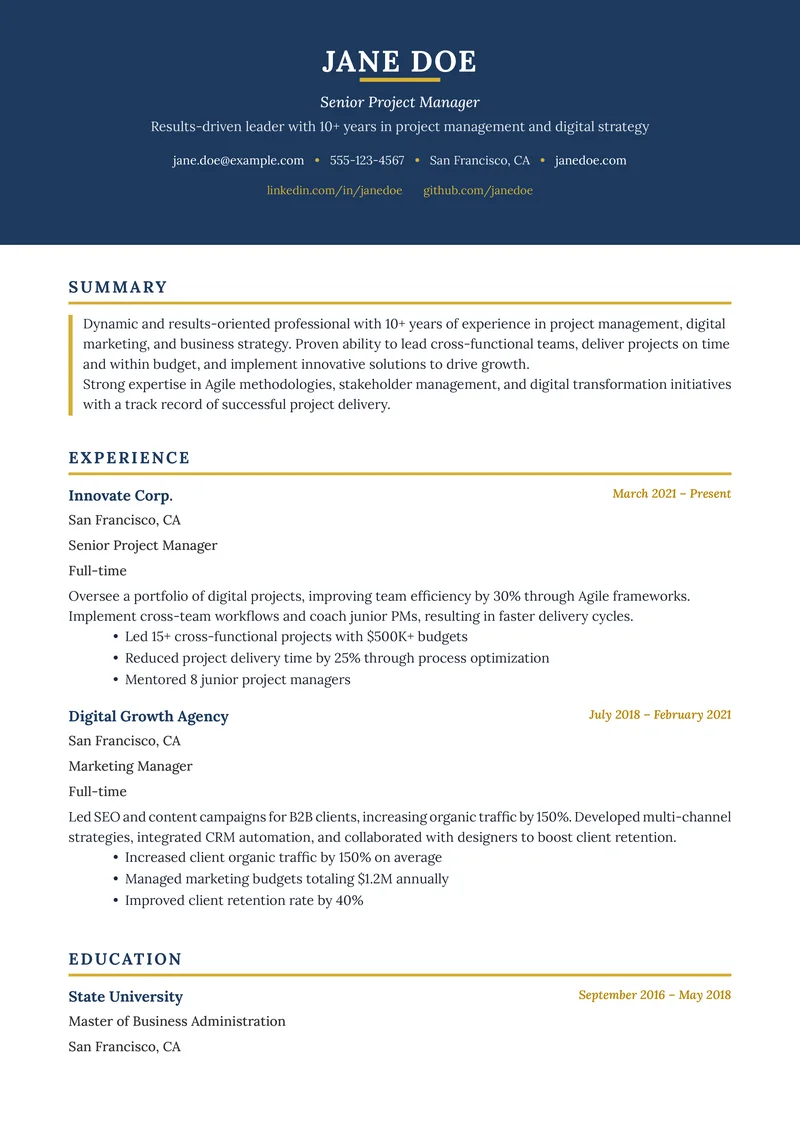
Build Your Perfect Resume
Create an ATS-optimized resume with our AI-powered builder.
No signup required.Start Building FreeExplore Resources
Enjoyed this article?
Share it with your network