You found the perfect job. You hit “Apply” with your go-to resume.
And then… nothing. No callback. No interview. Just silence.
Here’s what likely happened: that resume you sent? It was competing against candidates who took 10 extra minutes to tailor theirs specifically for that job.
More likely to interview
Tailored resumes vs. generic applications
Source: Teal HQ, 2024
Sending the same resume everywhere isn’t a strategy. It’s a lottery ticket—and the odds aren’t in your favor.
This guide shows you exactly how to tailor your resume for any job, step by step, in about 10 minutes. (Want to check your current match? Try the Job Matcher tool.)
Why Tailoring Works
- 83% of recruiters prefer customized resumes over generic ones
- ATS systems match keywords—tailoring improves your match score by 40%+
- Recruiters scan for 7-17 seconds—tailored content puts the right info first
- It shows genuine interest—not just spray-and-pray desperation
Why Generic Resumes Fail
| Generic Resume | Tailored Resume |
|---|---|
| Same summary for every job | Summary mirrors the role's key requirements |
| Skills listed in your order | Skills reordered to match job priorities |
| All experience treated equally | Most relevant experience emphasized first |
| Missing job-specific keywords | Keywords from JD naturally integrated |
| Feels like a template | Feels like it was written for THIS job |
The ATS Factor
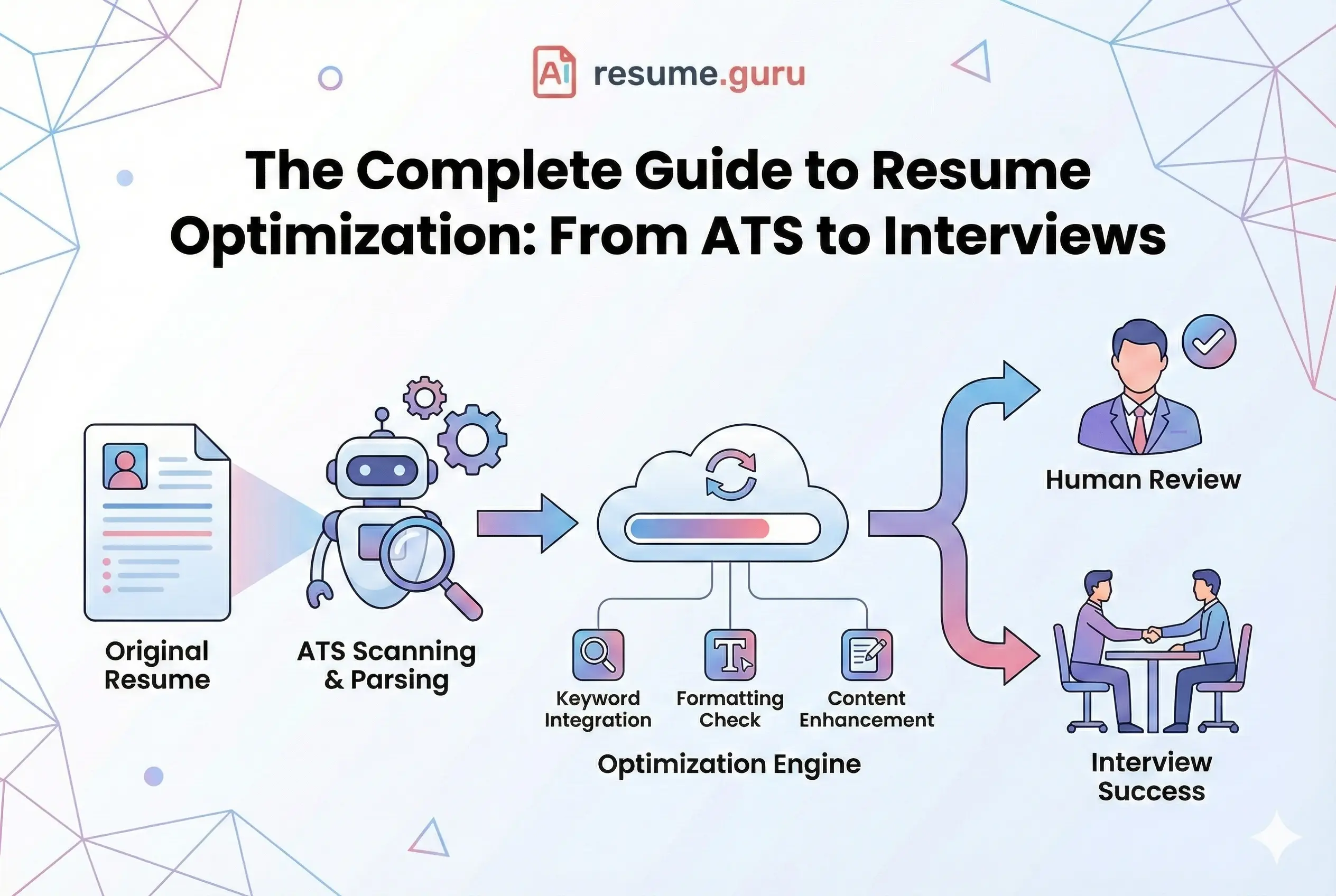
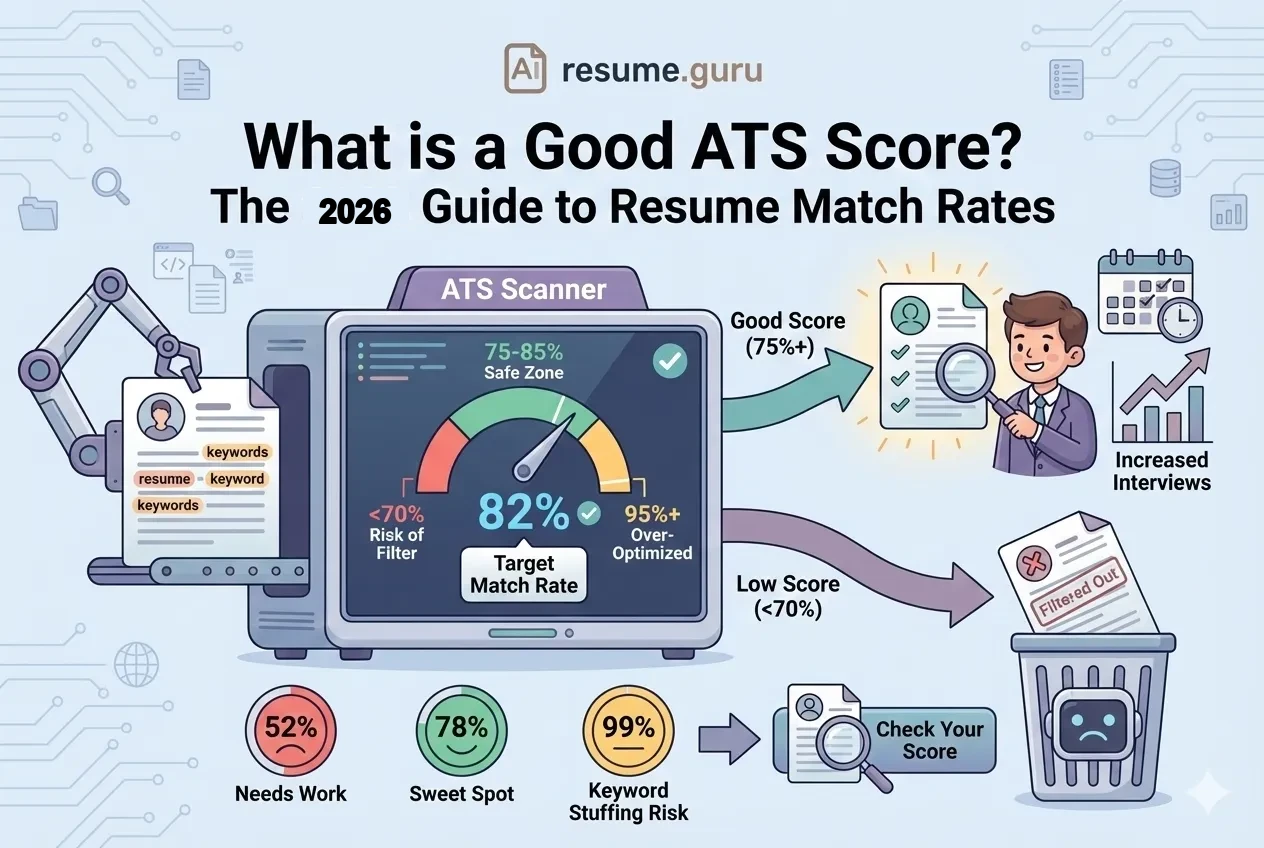
Most large companies use Applicant Tracking Systems that score resumes against job descriptions. A tailored resume with the right keywords scores higher—and gets seen by humans.
Step 1: Decode the Job Description
Not all words in a job posting carry equal weight. Learn to read between the lines. If you’d rather have the decoding done for you, you can tailor your resume to the job and review what it pulled out.
Identify the “Must-Haves” vs. “Nice-to-Haves”
Job descriptions reveal priorities through language:
| Language Pattern | What It Means |
|---|---|
| Required, essential, must have | Non-negotiable—you need these |
| Preferred, ideal, bonus | Nice-to-have—highlight if you have them |
| Listed first in requirements | Usually most important |
| Repeated multiple times | Keyword they're filtering for |
| In job title or first paragraph | Core to the role |
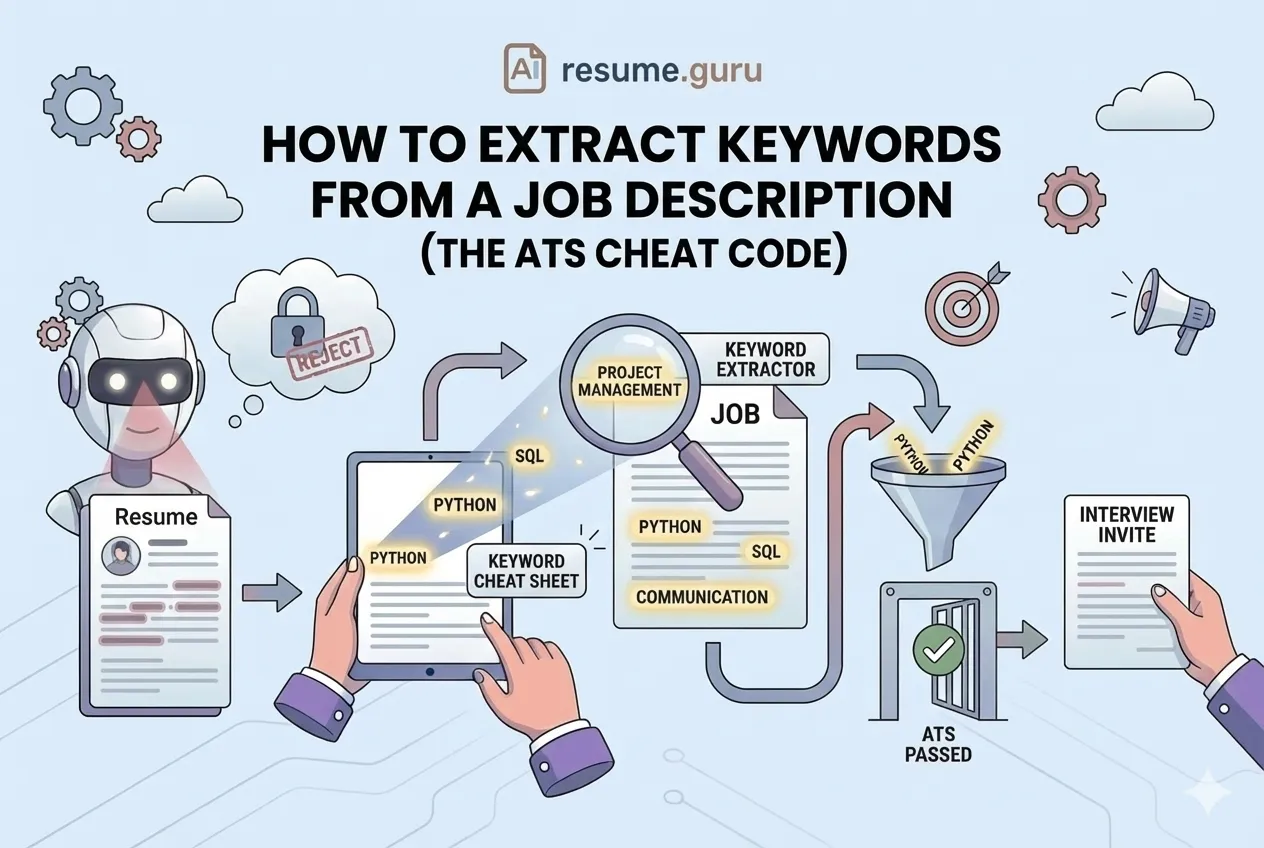
Extract the Keywords
Read the job description with a highlighter (digital or mental). Mark:
- Hard skills — specific technologies, tools, certifications
- Soft skills — leadership, communication, collaboration
- Industry terms — jargon specific to that field
- Action words — what they expect you to do (manage, build, analyze)
Pro Move
Copy the job description into a keyword extraction tool or AI and ask: “What are the 10 most important keywords in this job posting?”
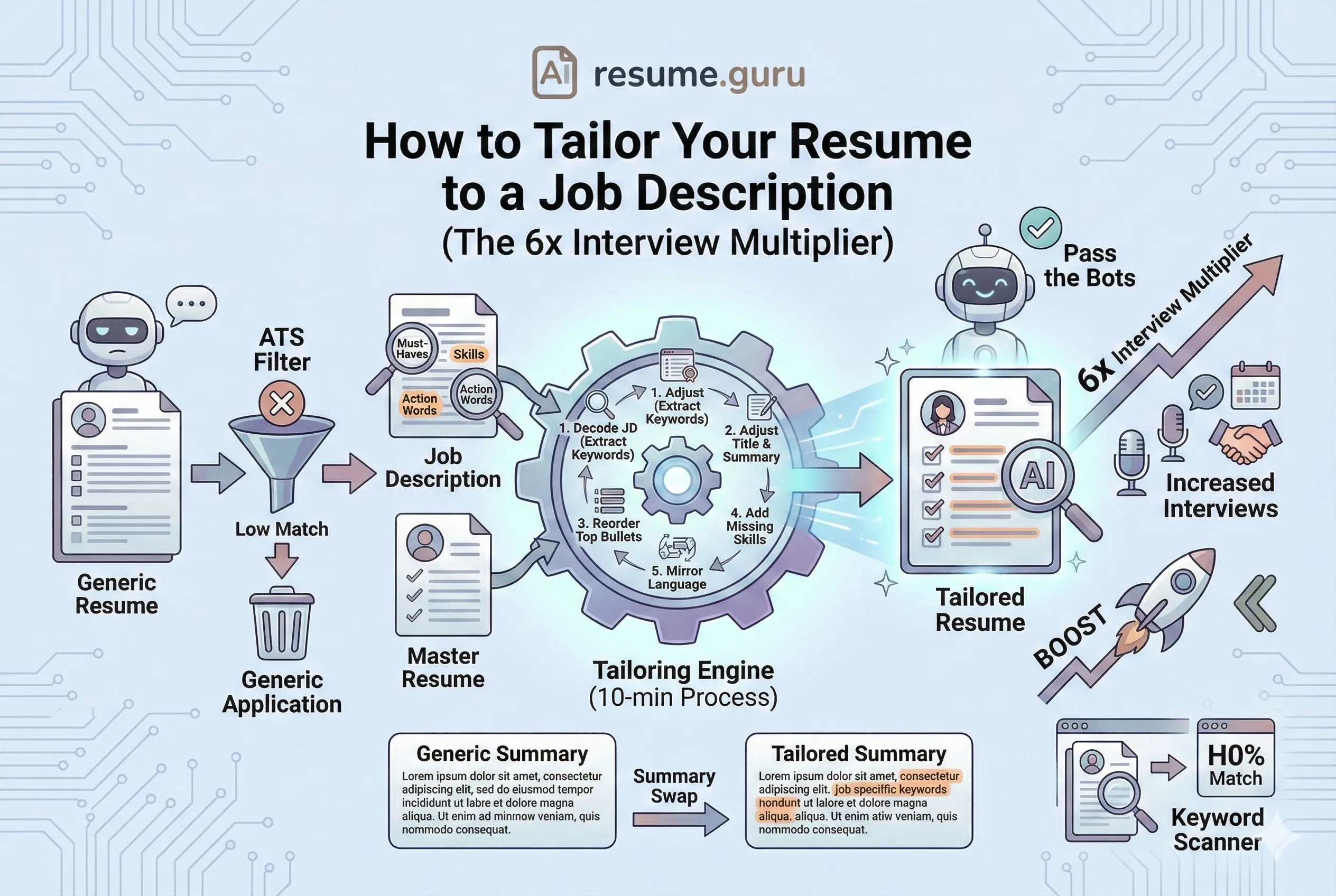
Step 2: The 10-Minute Tailoring Framework
You don’t need to rewrite your resume from scratch. Follow this framework:
- 1
Adjust your job title headline (1 min)
If you were a 'Marketing Coordinator' but they want a 'Digital Marketing Specialist,' use the closest accurate title you can claim.
- 2
Rewrite your professional summary (3 min)
Mirror their top 3 requirements. If they want 'data-driven marketer with B2B experience,' your summary should echo that language.
- 3
Reorder top 3 bullets in most recent job (3 min)
Move bullets that match the JD's priorities to the top. Most relevant achievements first.
- 4
Add missing keywords to skills section (2 min)
If they want 'Salesforce' and you have it but didn't list it, add it.
- 5
Quick scan for terminology alignment (1 min)
Use their language. If they say 'stakeholder management' and you said 'working with leaders,' match their phrasing.
Step 3: Mirror Their Language (But Don’t Copy)
ATS systems look for keyword matches. Recruiters look for fit.
Don't Do This
Copy-pasting exact phrases from the job description into your resume verbatim. It looks suspicious and doesn’t demonstrate genuine experience.
Do This Instead
Job Description says: “Seeking candidate to drive cross-functional collaboration and manage complex stakeholder relationships.”
Your tailored bullet: “Led cross-functional initiatives with 5+ departments, managing stakeholder relationships across product, engineering, and sales.”
You’re using their terminology while demonstrating your actual experience.
Step 4: The Summary Swap
Your professional summary is the single most important element to tailor. It’s often the first thing both ATS and humans scan. If rewriting it per role is the part you skip, generate a resume summary from the posting and trim from there.
Before/After Example
Generic Summary (Sent to Every Job):
“Experienced marketing professional with 5+ years in digital and traditional marketing. Strong communication skills and proven track record of success. Looking for a challenging role.”
Tailored for “B2B SaaS Marketing Manager” Role:
“B2B SaaS marketing manager with 5+ years driving demand generation and pipeline growth. Increased MQLs by 150% at [Company] through content marketing and marketing automation. HubSpot and Salesforce certified.”
| Generic Version | Tailored Version |
|---|---|
| 'marketing professional' | 'B2B SaaS marketing manager' (their title) |
| 'proven track record' | Specific 150% MQL increase |
| 'strong communication skills' | HubSpot/Salesforce (tools they want) |
| 'Looking for a challenging role' | Job titles and outcomes, not desires |
Step 5: What to Tailor vs. What Stays Constant
Not everything needs to change for every application.
Always Tailor ✅
- Professional summary — rewrite for each role
- Top 2-3 bullets in recent experience
- Skills section order — priorities first
- Keywords from the job description
- Job title (if legitimately flexible)
Stays Constant ❌
- Company names, dates, locations
- Core achievements and metrics
- Education and certifications
- Contact information
- General formatting and design
Tailoring vs. Lying: Where’s the Line?
Let’s be clear about ethics here. When you’re unsure a rewrite crossed the line, get an honest resume roast and see whether the claims still hold up.
| ✅ Tailoring (Acceptable) | ❌ Lying (Never OK) |
|---|---|
| Emphasizing relevant experience over less relevant | Adding experience you don't have |
| Using their terminology for things you've done | Claiming skills you can't demonstrate |
| Reordering bullets by relevance | Inflating metrics or results |
| Adding optional context ('B2B,' 'SaaS') | Changing job titles to ones you never held |
| Removing irrelevant old jobs | Hiding employment gaps dishonestly |
The Interview Test
If you tailor something, you should be able to discuss it confidently and in detail during the interview. If you can’t—it shouldn’t be on your resume.
Tools That Make Tailoring Faster
You don’t have to do this manually every time.
Keyword Scanners
Tools that compare your resume against job descriptions and show match percentage:
Check your resume against any job
Our Keyword Scanner analyzes your resume against any job description, showing exactly which keywords you're missing and where to add them.
Try Keyword ScannerMaster Resume Approach
- Create one “master resume” with ALL your experience
- For each application, duplicate and delete/reorder as needed
- Much faster than starting from scratch each time
Common Tailoring Mistakes
Mistake 1: Keyword Stuffing
Adding every keyword from the JD whether relevant or not. ATS systems and humans both detect this. Only add keywords for skills you actually have.
Mistake 2: Only Changing Keywords
Swapping a few words but keeping the same generic structure. The summary and top bullets need actual rewriting, not just word substitution.
Mistake 3: Tailoring the Wrong Things
Spending time rewriting old, irrelevant jobs instead of the summary and recent experience. Focus on the top third of page one.
Mistake 4: Being Too Literal
If they want “5+ years experience” and you have 4.5, you can still apply. Tailoring isn’t about meeting every requirement literally—it’s about demonstrating fit.
Quick Reference Checklist
Before You Apply
- Read the full job description (not just the title)
- Identified the 5-10 most important keywords
- Rewritten professional summary to mirror requirements
- Reordered top 3 bullets in recent experience
- Added missing relevant keywords to skills section
- Removed or de-emphasized irrelevant information
- Read resume aloud—does it sound targeted to THIS job?
The Bottom Line
Tailoring takes 10 extra minutes. That investment pays off with 6x higher interview rates.
Generic resumes get generic results: silence.
The job seekers who win aren’t necessarily more qualified. They’re just better at showing the recruiter exactly what they want to see—before the recruiter has to look for it.
Make tailoring even faster
AI ResumeGuru's Keyword Scanner shows exactly what's missing from your resume for any job—in seconds.
Try Keyword Scanner FreeRelated Resources
- ATS Keywords by Industry — Industry-specific keyword lists
- Resume Optimization Guide — Complete ATS strategy
- Resume Bullet Points — How to write strong bullets to tailor
- Power Words for Resume — Verbs that match job requirements
- Keyword Scanner — Compare resume to any job
- Job Matcher Tool — See how well you match a role
- Resume Templates — ATS-optimized designs
Frequently Asked Questions
How much should I tailor my resume for each job?
At minimum: adjust your summary, reorder your top bullets to match the job, and add missing keywords. You don't need to rewrite everything—focus on the top third of page one, where recruiters look first.
Is tailoring a resume the same as lying?
No. Tailoring means emphasizing your most relevant real experience. Lying means inventing experience you don't have. Reorder, rephrase, and prioritize—but never fabricate.
How long does it take to tailor a resume?
Once you have a master resume, tailoring should take 10-15 minutes per application. The first few take longer; after practice, it becomes faster.
Should I tailor my resume for every single job?
For jobs you really want, yes—always. For mass applications, at minimum adjust keywords and your summary. The more tailored, the better your chances.
What if I don't have the exact skills listed in the job description?
Highlight transferable skills and related experience. You don't need 100% match—focus on the 'must-haves' and demonstrate learning ability for 'nice-to-haves.'
Put this into practice
You have the theory. These take a few minutes and work on the resume you already have.